
The Pilate stone
GradeEstablished
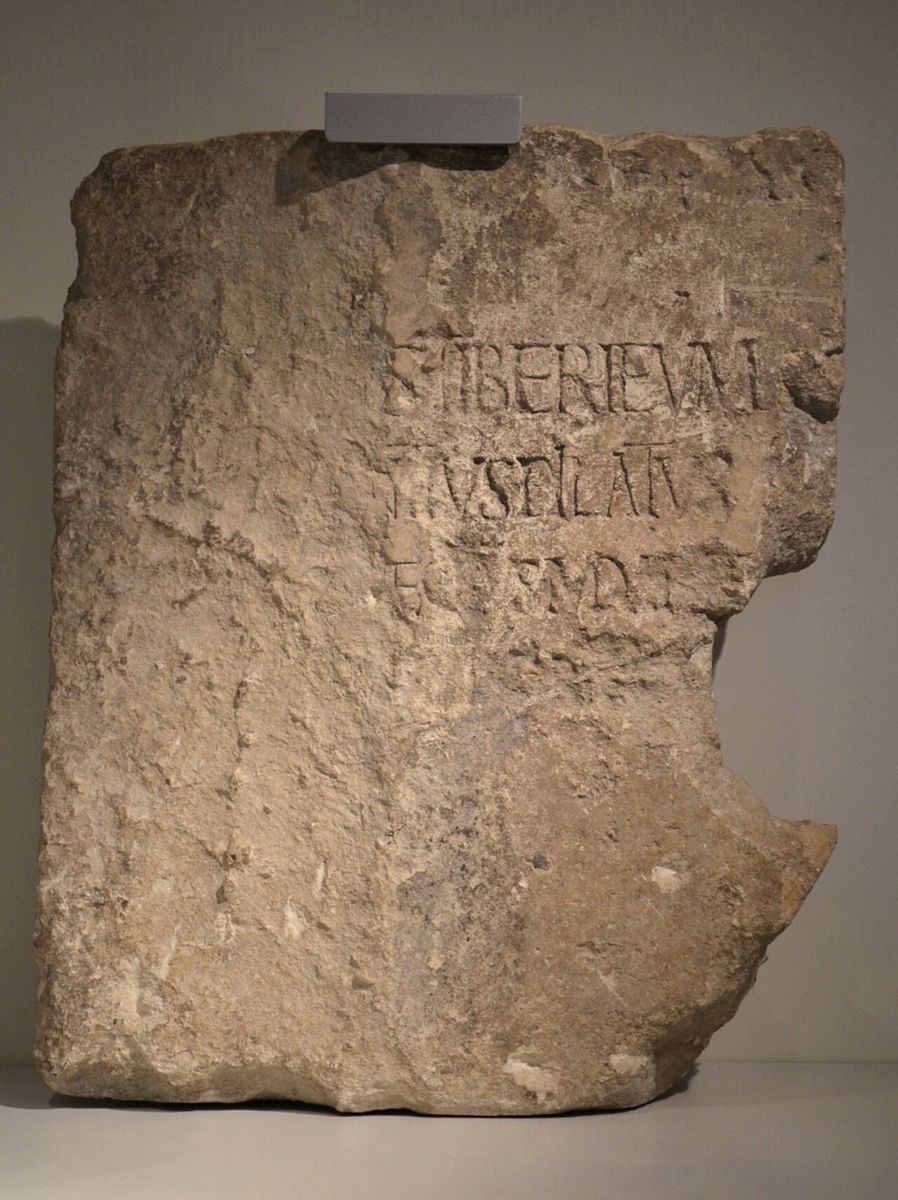
The Gospels name the Roman governor who condemned Jesus, and Luke dates John the Baptist's preaching to the time when "Pontius Pilate being governor of Judæa" (). In June 1961 excavators in the theatre at Caesarea Maritima found a limestone block, reused in a 4th-century stair, that bears his name. The reconstructed text reads "Pontius Pilate, prefect of Judaea, dedicated [this] Tiberieum". It is the only inscription from Pilate's own lifetime, and it confirms the man, his post and his exact title, praefectus (prefect). The Gospels call him simply "governor", which fits that title. Christians point out that the people of the Passion story are real figures in their real offices, set where and when the Gospels place them.
Established. The stone is authentic and contemporary, and its link to the Pilate of the Gospels is secure. It confirms Pilate's existence, his post and his title. The Roman historian Tacitus, writing later, calls him "procurator", a title that does not fit Pilate's time, so the stone also shows which title was correct.
Explore the counterarguments
Pilate's existence was never in serious doubt: the Jewish writers Josephus and Philo already describe him. The stone therefore confirms the setting of the Gospels, not the trial of Jesus or anything said or done at it.