
The Temple warning inscription
GradeEstablished
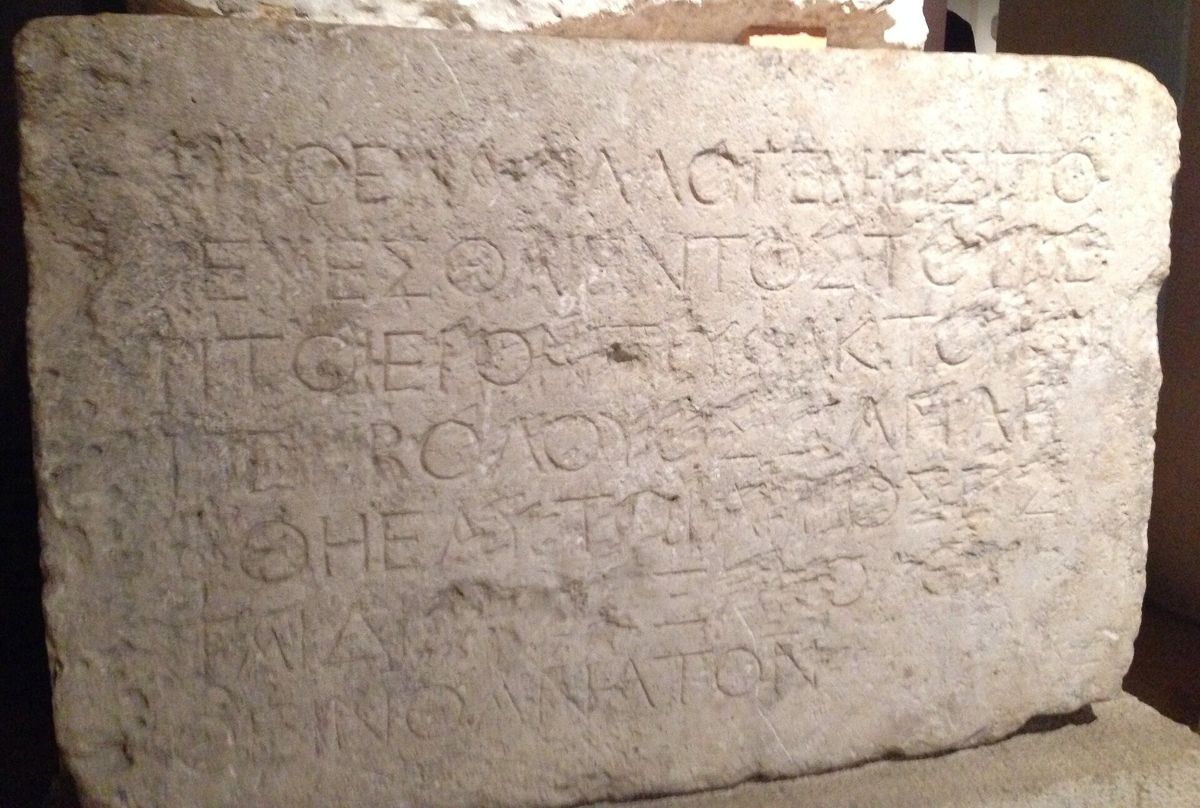
Acts tells how Paul was seized in the Temple on the charge that he "brought Greeks also into the temple, and hath polluted this holy place" (), and Paul's letter to the Ephesians speaks of Christ having "broken down the middle wall of partition between us" (). A complete stone tablet found in 1871 by Clermont-Ganneau, and a fragment found in 1936 with traces of red paint, carry the warning that stood in Herod's Temple. In Greek it warns that no foreigner may pass the barrier and enclosure around the sanctuary: whoever is caught will be to blame for the death that follows. Josephus, in his Jewish War, describes the same notices, "that no foreigner should go within that sanctuary". Christians point out that the inscription shows the charge against Paul in Acts was a capital one, just as the story implies.
Established. The inscription is authentic, from Herod's Temple, and its link to the barrier that Acts presupposes is secure. It confirms that the charge in Acts was a capital one.
Explore the counterarguments
The inscription confirms the Temple barrier and its penalty, not the particular incident with Paul.