
Jehohanan, a crucified man
GradeEstablished
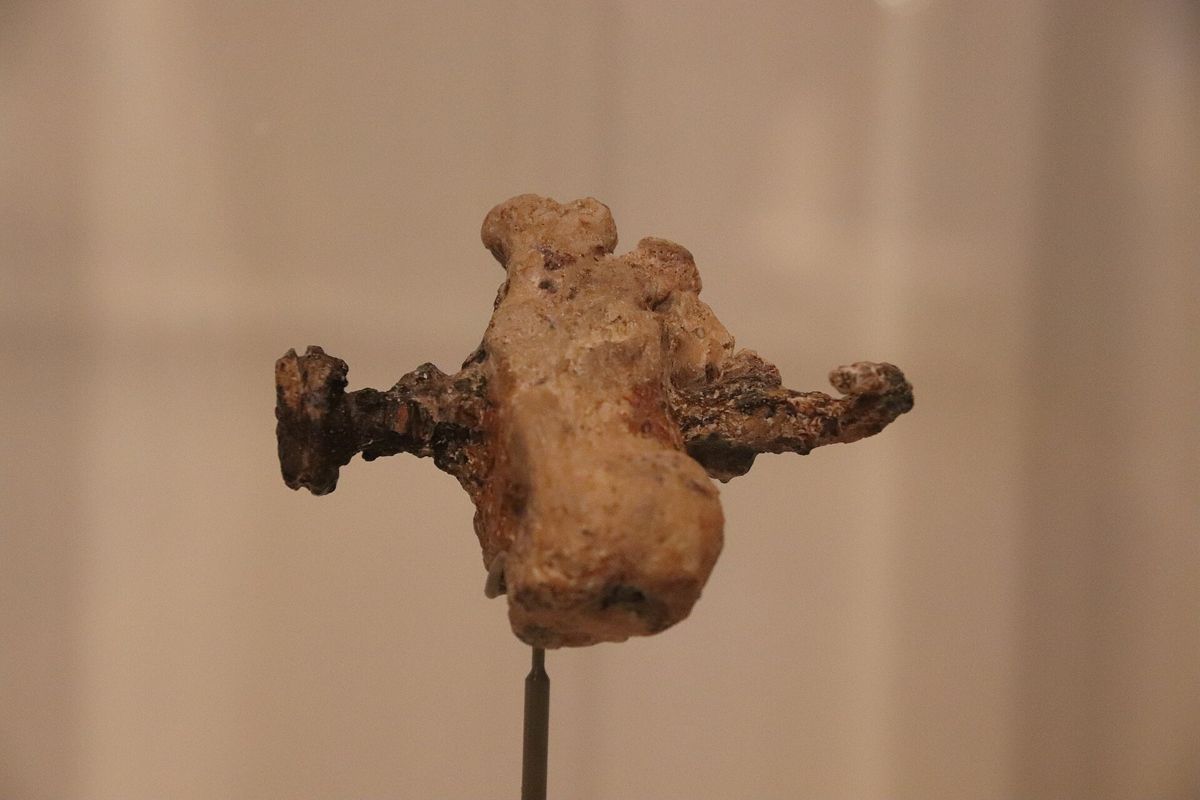
The Gospels say that Jesus was crucified and that Joseph of Arimathea "wrapped him in the linen, and laid him in a sepulchre which was hewn out of a rock" (). Some scholars, Crossan among them, have argued that crucified men were not given such burials. In 1968 a Jewish family tomb at Giv'at ha-Mivtar in Jerusalem yielded an ossuary inscribed "Jehohanan the son of Hagkol", holding a right heel bone pierced by an iron nail with wood still attached. It shows two things: nails were used, at least through the feet, in 1st-century Judaea; and a crucified man could receive a proper Jewish burial in a family tomb, with his bones later gathered into an ossuary. Christians point out that this matches the burial the Gospels describe.
Established. The find is authentic and of the 1st century, and the man was certainly crucified. It shows that such a burial was possible for a crucified man, which bears on the debate over whether Jesus' body would have been buried.
Explore the counterarguments
The find is not linked to Jesus. It shows that a family-tomb burial of a crucified man could happen, not that it happened for Jesus. The first reconstruction (Haas, 1970), with nails through both forearms, was found by Zias and Sekeles (1985) to contain "multiple errors"; they proposed that the arms were tied and only the feet nailed.