
Archaeology.

Inscriptions, buildings and objects that bear on the people, places and practices of the Gospels and Acts, together with the famous finds that turned out to be later or forged. Each is graded on whether it is genuine, whether its link to the text is secure, and what exactly it shows.

Established 6Probable 3Illustrative 2Disputed 5Later than claimed 1Forgery 2
Caesarea, 1961

The Pilate stone

A dedication by "Pontius Pilate, prefect of Judaea", the only inscription of his lifetime.

Established
Jerusalem, 1990

The Caiaphas ossuary

A decorated bone box inscribed "Joseph son of Caiaphas", from a family tomb in Jerusalem.

Probable
Delphi, early 20th century

The Gallio inscription

A letter of Claudius naming "Junius Gallio, my friend and proconsul", which dates Paul's stay in Corinth.

Established
Corinth, 1928-1929 and 1947

The Erastus pavement

A paving inscription: "Erastus in return for his aedileship paved it at his own expense."

Disputed
Jerusalem, 2004

The Pool of Siloam

The stepped Second Temple pool at the south end of the City of David, uncovered during sewer works.

Established
Jerusalem, 19th-20th c. excavations

The Pool of Bethesda

Twin pools beside St Anne's Church in the Muslim Quarter, long identified with John's Bethesda.

Probable
Nazareth, 2009 and earlier

First-century houses at Nazareth

A house and tombs of the early Roman period show a small Jewish village at Nazareth in Jesus' time.

Established
Capernaum, 1968 onward

The "house of Peter" at Capernaum

A modest 1st-century house, set apart for Christian use and later built over by an octagonal church.

Probable
Magdala, 2009

The Magdala synagogue and stone

A 1st-century synagogue at Magdala, with a carved stone showing the Temple and menorah.

Illustrative
Jerusalem (Giv'at ha-Mivtar), 1968

Jehohanan, a crucified man

A heel bone pierced by an iron nail, from an ossuary in a Jewish family tomb.

Established
Jerusalem, 1871 and 1936

The Temple warning inscription

Herod's Temple warning, in Greek: foreigners passing the barrier would be to blame for their own death.

Established
Sea of Galilee, 1986

The Galilee boat

A first-century fishing boat preserved in the mud, about 8 metres long, rowed and sailed.

Illustrative
Unprovenanced, published 2007

"Gabriel's Revelation"

An ink-written stone of Jewish prophecies; one line has "in three days", read very differently by its editors.

Disputed
Bought in Nazareth, 1878

The Nazareth inscription

A marble edict ordering death for violating tombs, once linked to the empty tomb; a study of the marble traces it to Kos.

Disputed
Antiquities market, made public 2002

The James ossuary

A genuine bone box whose inscription naming "Jesus" may in part be modern; a forgery trial ended in acquittal.

Disputed
Jerusalem, 1980

The Talpiot tomb

A family tomb with ossuaries bearing common names, presented in 2007 as Jesus' family grave.

Disputed
First recorded at Lirey, France, 1350s

The Shroud of Turin

A linen cloth with the image of a crucified man, radiocarbon-dated by three laboratories to 1260-1390.

Later than claimed
Presented 2012

The "Gospel of Jesus' Wife"

A Coptic fragment presented as ancient in 2012 and shown in 2016 to be a modern forgery.

Forgery
Publicized 2011

The Jordan lead codices

Small lead books said to come from a Jordanian cave; regarded by the antiquities authorities of Israel and Jordan as forgeries.

Forgery
← All finds

The Magdala synagogue and stone

GradeIllustrative
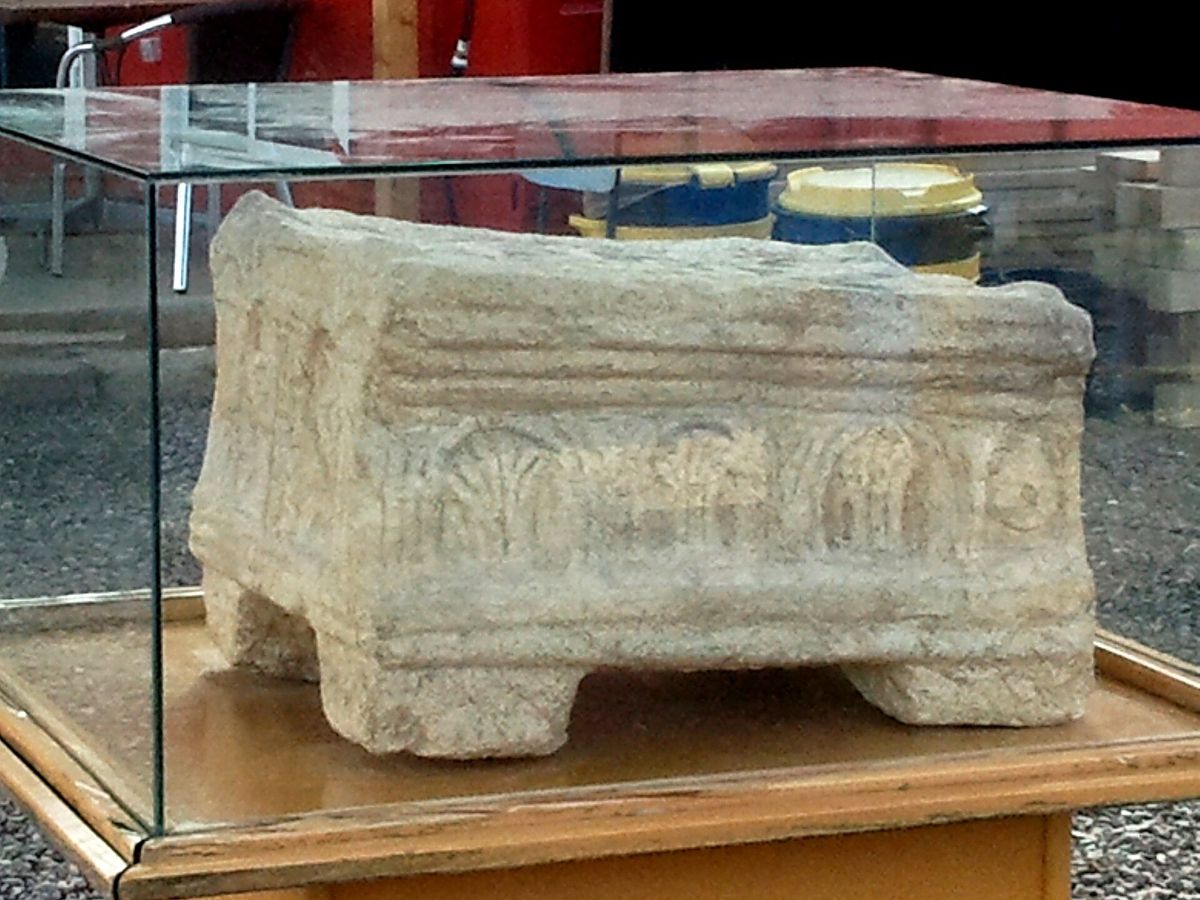
The Magdala stone, as displayed at Magdala (2012).
The Magdala stone, as displayed at Magdala (2012). Photo: Hanay · CC BY-SA 3.0 · Wikimedia Commons
The Christian case

The Gospels say that Jesus "preached in their synagogues throughout all Galilee" (). In 2009 a synagogue in use before 70 was excavated at Magdala (Migdal) on the Sea of Galilee, the home town of Mary Magdalene. Inside it, a carved stone block shows the Temple, with the earliest known image of a menorah found in a synagogue. Christians point out that this is exactly the kind of Galilean synagogue in which the Gospels place Jesus' teaching, and that it answers an older view, held by some scholars, that Galilee had few or no synagogue buildings before 70.

What the research found

Illustrative. The synagogue and the stone are authentic and of the period. They show that first-century Galilean synagogues existed, which illuminates the background of the Gospels.

Explore the counterarguments

The find is not linked to any named event or person in the Gospels. It shows the kind of place the Gospels describe, not that any particular episode happened there.

↑ ↓ to move · Enter to open · Esc to close